Bonifatius church transformation
Bonifatius church transformation
Bonifatius church transformation
This study explores the transformation of the St. Bonifatius Church in Dordrecht into a residential development. Commissioned by Twenty-Four Real Estate Care Services, the project envisions a respectful adaptation of the existing religious structure into a mixed-use development combining residential units, activities, and a winter garden. The approach preserves the building’s architectural integrity while ensuring its continued relevance and integration into community life.
This study explores the transformation of the St. Bonifatius Church in Dordrecht into a residential development. Commissioned by Twenty-Four Real Estate Care Services, the project envisions a respectful adaptation of the existing religious structure into a mixed-use development combining residential units, activities, and a winter garden. The approach preserves the building’s architectural integrity while ensuring its continued relevance and integration into community life.
Client
Twenty-four Care Services
Twenty-four Care Services
Service
Study
Study
Size
Sophie Valla, Ismini Christakopoulou
Design team
Sophie Valla, Ismini Christakopoulou
Location
Design team
Dordrecht, Netherlands
Sophie Valla, Ismini Christakopoulou
Location
Dordrecht, Netherlands
Status
August 2018
Historic Significance
Historic signifiance
The three locations in the Roman district hold historic significance.
The 19th-century Bonifatius Church, designed by architect Plukhooij, opened its doors in the 18th century.
Since its deconsecration, the church has hosted social functions. The adjacent mansion, originally owned by a wine merchant, became church property for an extended period. The 19th-century boys’ school on the other side currently serves a social function. The district, formerly characterized as a Catholic area, continues to support social and community activities.
The three locations in the Roman district hold historic significance.
The 19th-century Bonifatius Church, designed by architect Plukhooij, opened its doors in the 18th century.
Since its deconsecration, the church has hosted social functions. The adjacent mansion, originally owned by a wine merchant, became church property for an extended period. The 19th-century boys’ school on the other side currently serves a social function. The district, formerly characterized as a Catholic area, continues to support social and community activities.
Winter Garden
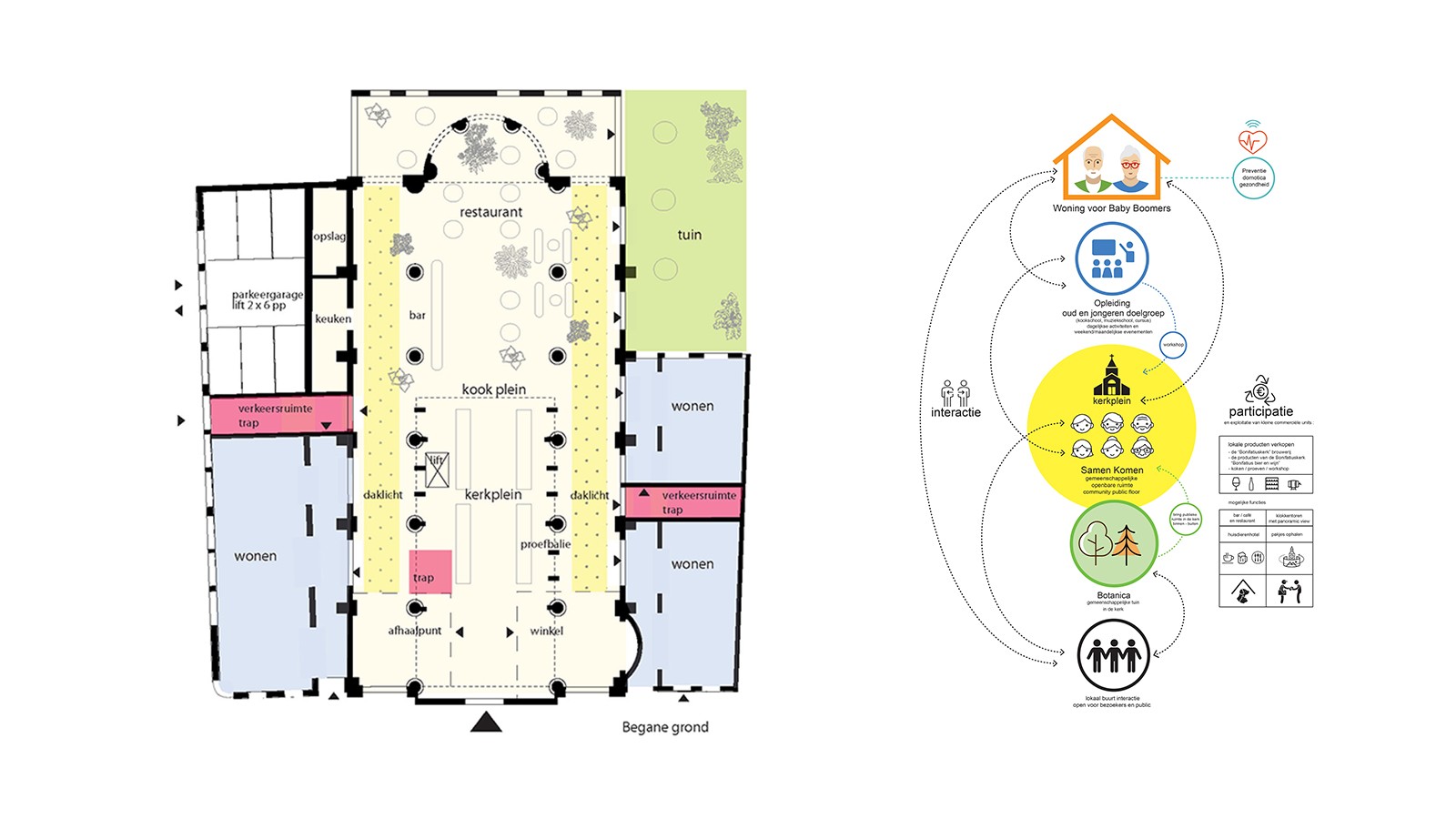
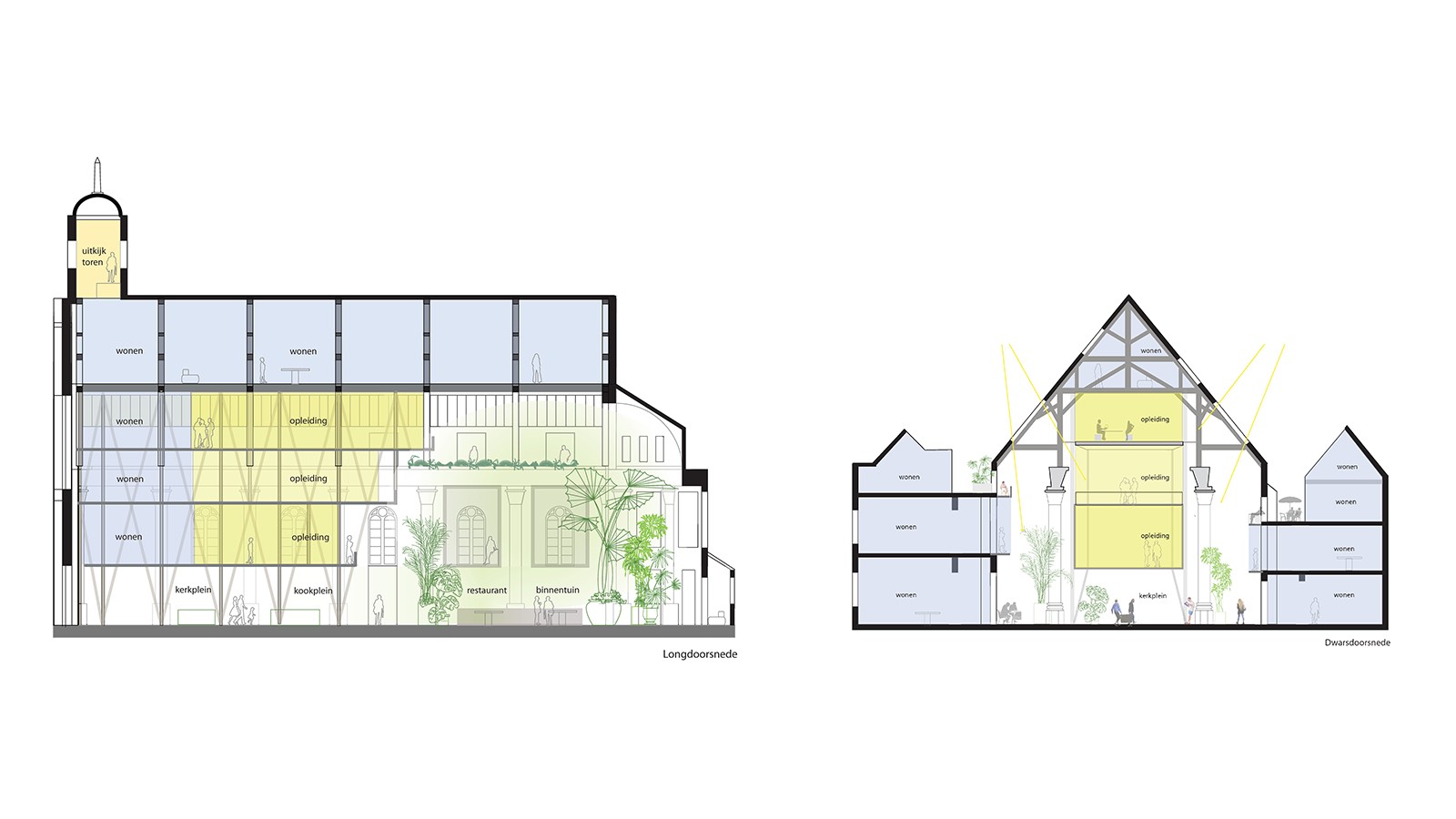
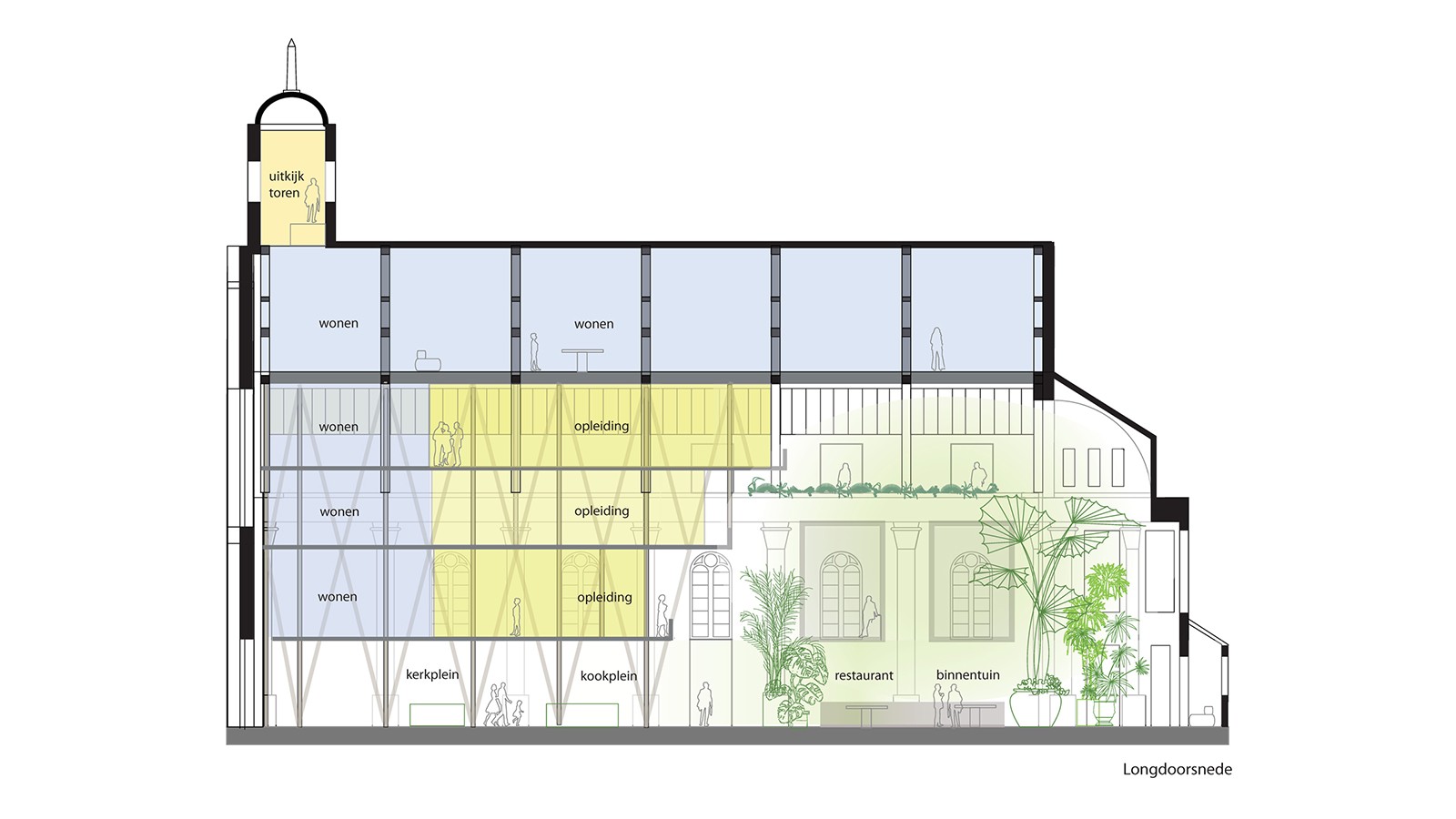
Our team explored several options that would honor the historical value of these three properties, which the municipality is selling in their entirety. We proposed a residence for active seniors, complemented by a semi-public winter garden. Dordrecht has an aging population facing a shortage of suitable housing. This group is not seeking a nursing home or care home, but rather apartments that support an active lifestyle while providing enhanced safety and health facilities.
Our team explored several options that would honor the historical value of these three properties, which the municipality is selling in their entirety. We proposed a residence for active seniors, complemented by a semi-public winter garden. Dordrecht has an aging population facing a shortage of suitable housing. This group is not seeking a nursing home or care home, but rather apartments that support an active lifestyle while providing enhanced safety and health facilities.
Changing lifestyle
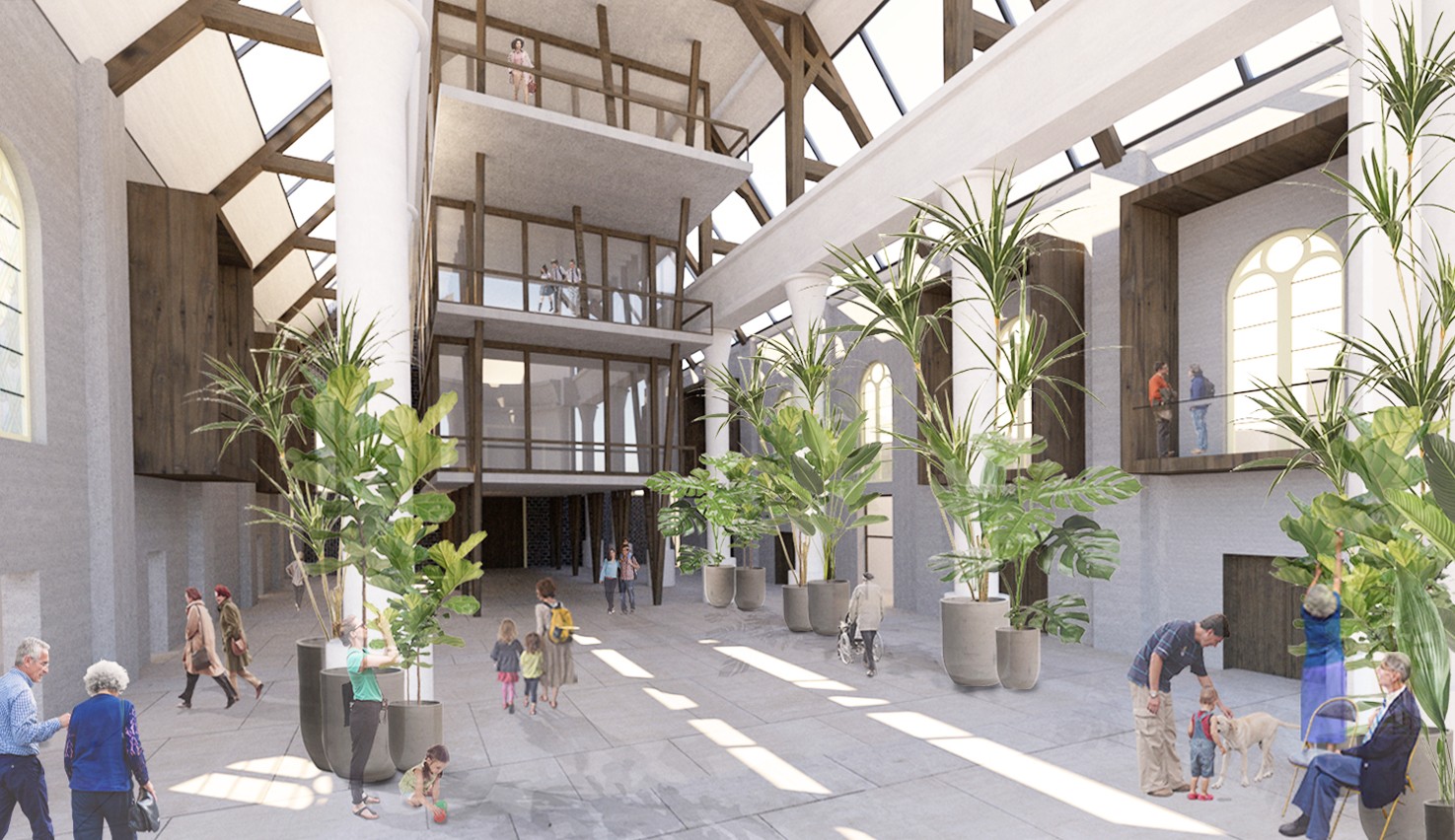
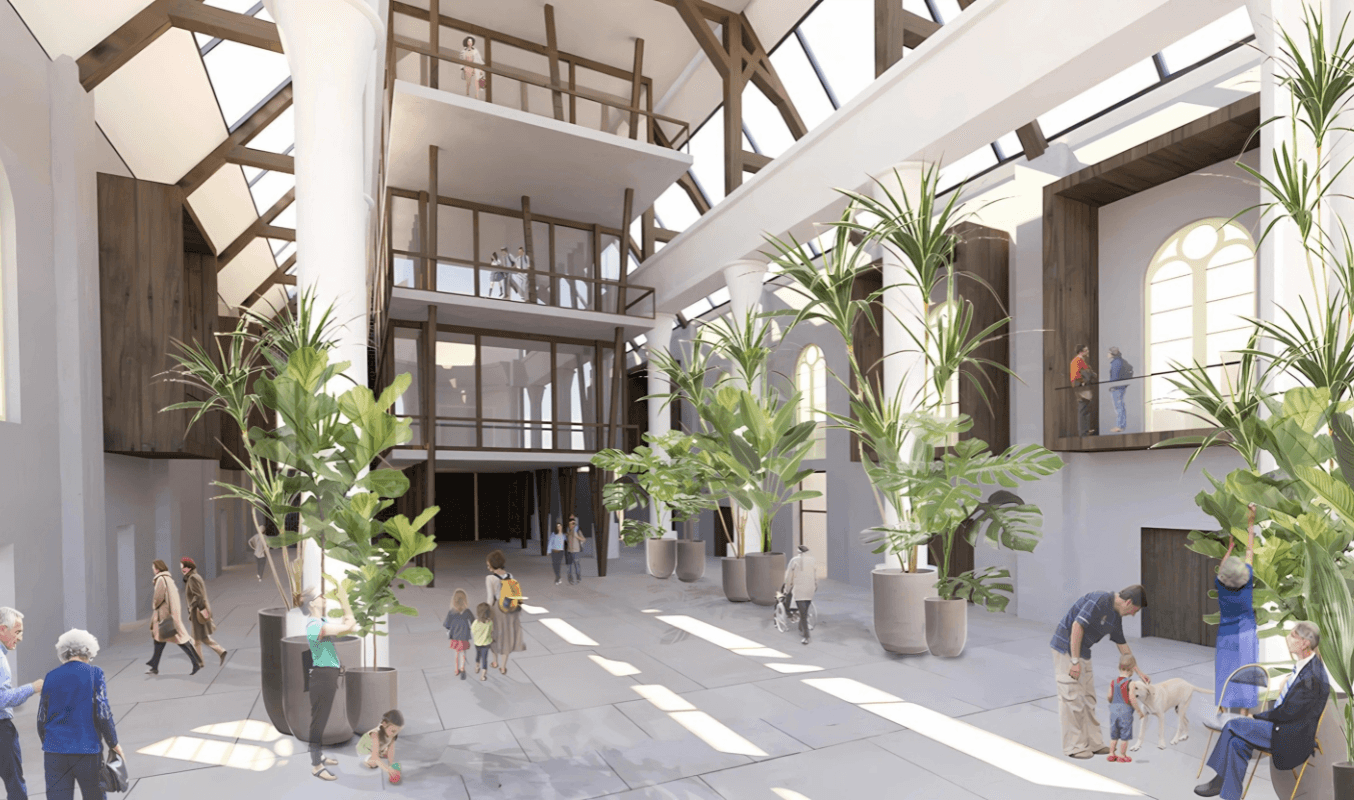
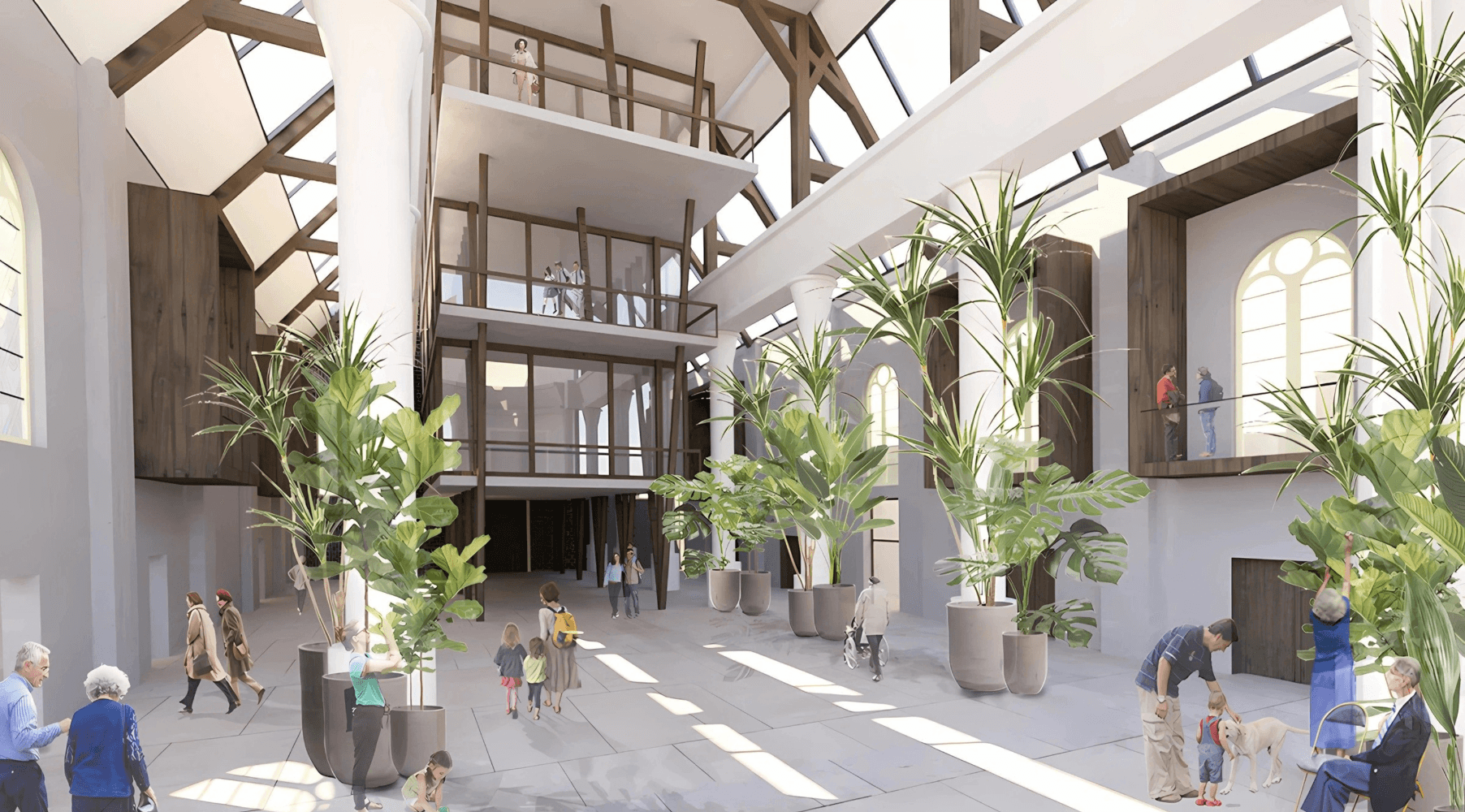
We propose apartments on either side of the church with access from the main nave, ensuring abundant natural light throughout. Additionally, the design incorporates an interior patio with the appeal of a winter garden and large planters. The apartments and the complex are designed to adapt to the residents’ changing lifestyle and health needs. Spacious elevators and hallways, barrier-free circulation, safe bathrooms, and integrated digital facilities support residents’ personal well-being and provide a connection to care services if needed. This digital system also enables residents to access additional services such as medication support or handyman assistance, ensuring both safety and convenience.
The study highlights the potential of heritage sites to evolve and serve new societal needs.
We propose apartments on either side of the church with access from the main nave, ensuring abundant natural light throughout. Additionally, the design incorporates an interior patio with the appeal of a winter garden and large planters. The apartments and the complex are designed to adapt to the residents’ changing lifestyle and health needs. Spacious elevators and hallways, barrier-free circulation, safe bathrooms, and integrated digital facilities support residents’ personal well-being and provide a connection to care services if needed. This digital system also enables residents to access additional services such as medication support or handyman assistance, ensuring both safety and convenience.
The study highlights the potential of heritage sites to evolve and serve new societal needs.