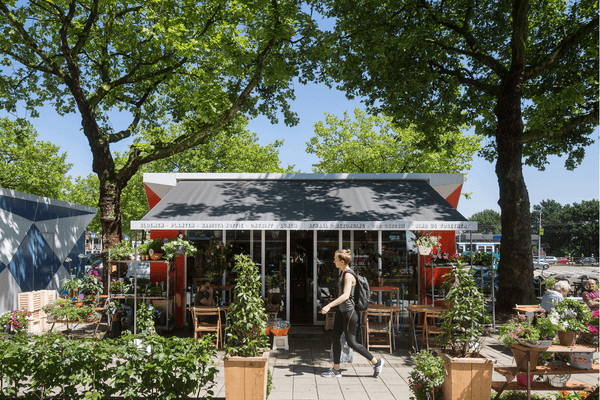
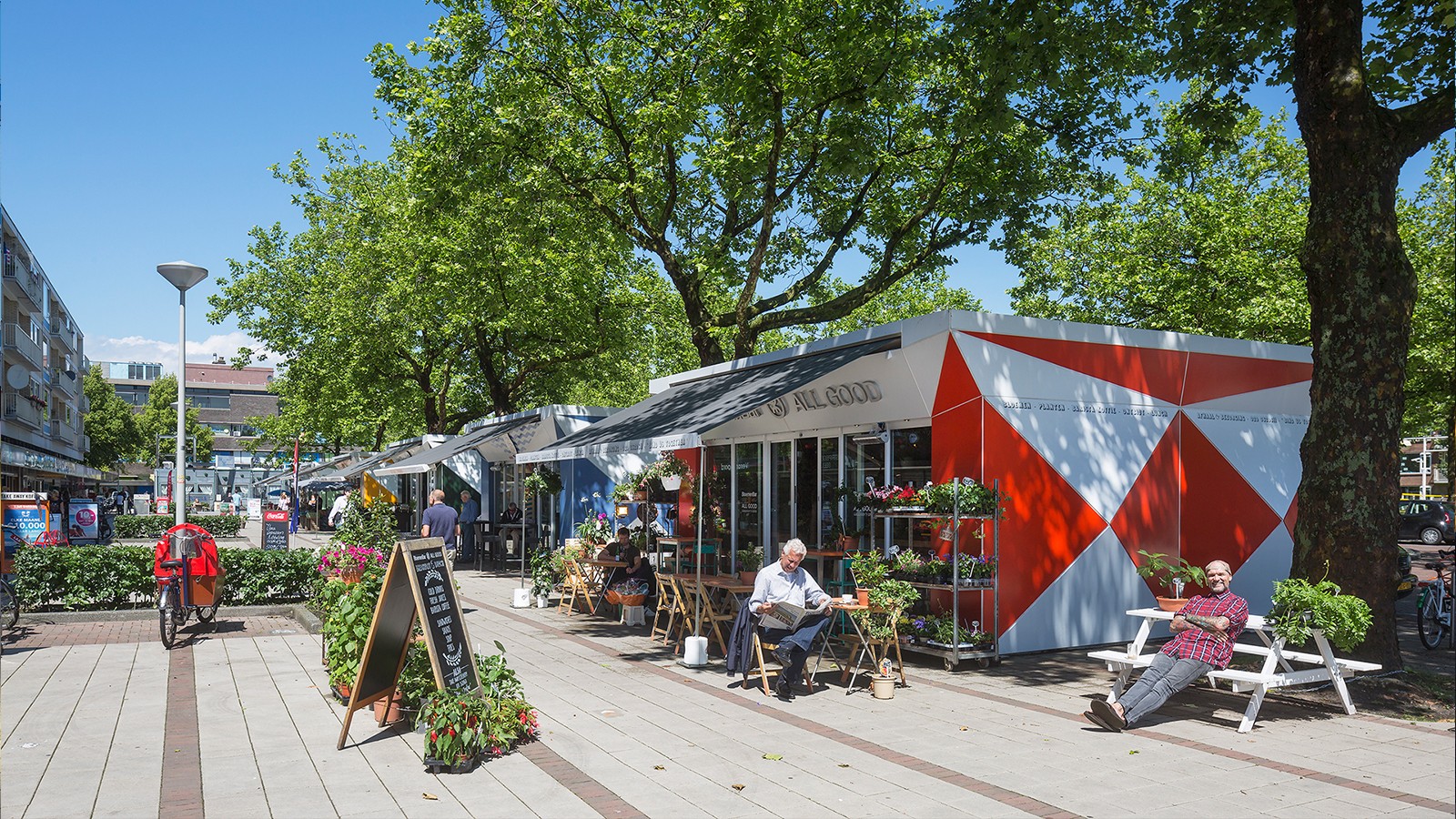

The Buitenveldert neighborhood originated in the 1960s as a post-war district that included several shopping areas. Over the years, the Rooswijck shopping plaza has evolved into an attractive destination for a wide audience. The first flower stand opened in 1962, followed by other temporary stands selling fresh food and groceries.
Renewal of a Square
The shopping square in Buitenveldert was due for renovation. The City of Amsterdam South sought a completely new vision — one that would be visually appealing and inviting for both residents and visitors.
The original temporary stalls had been placed side by side over time, without a coherent plan. Gradually, additional elements such as containers, cabinets, and storage units were attached to them, creating a cluttered appearance. From the street, the square was barely visible.
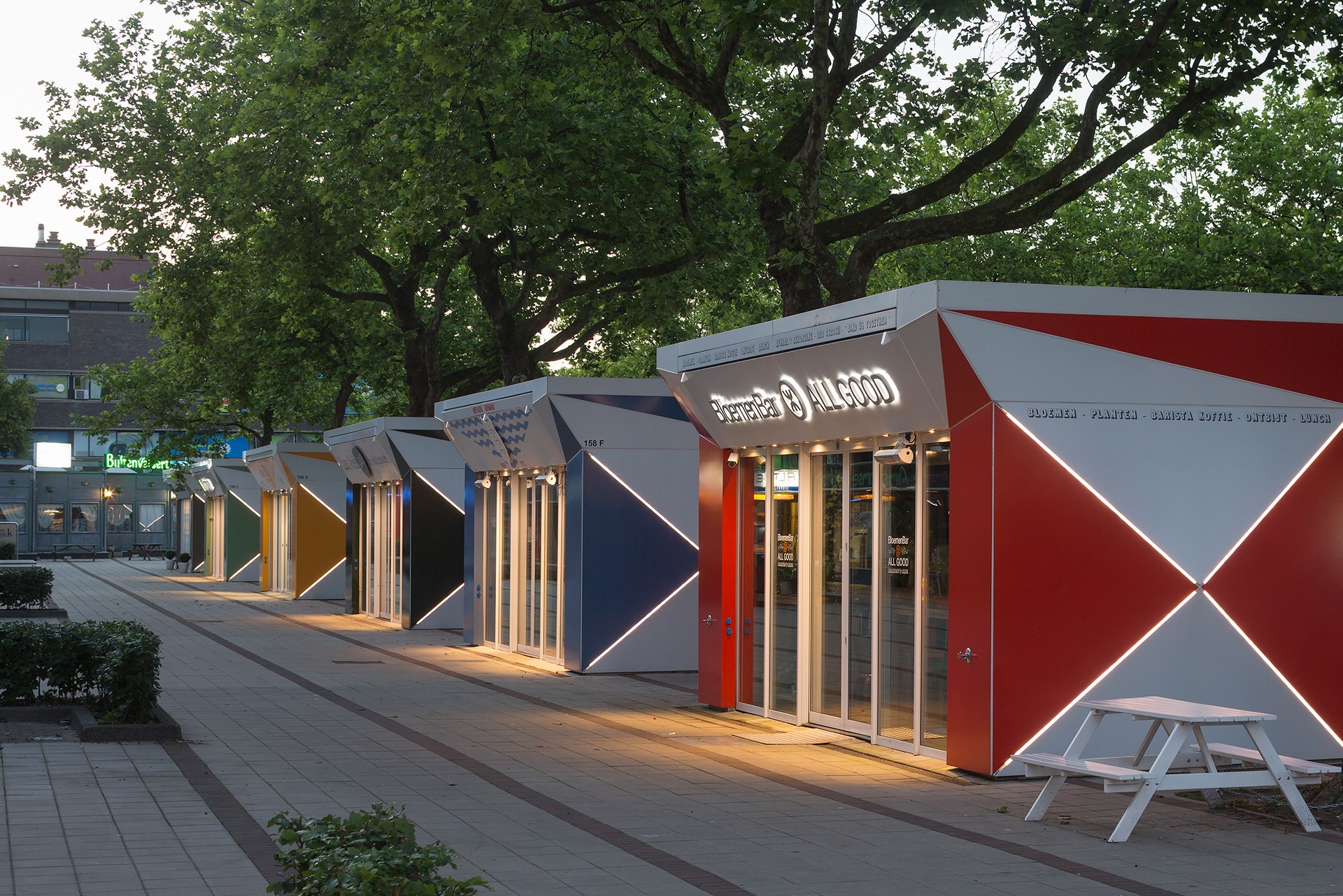
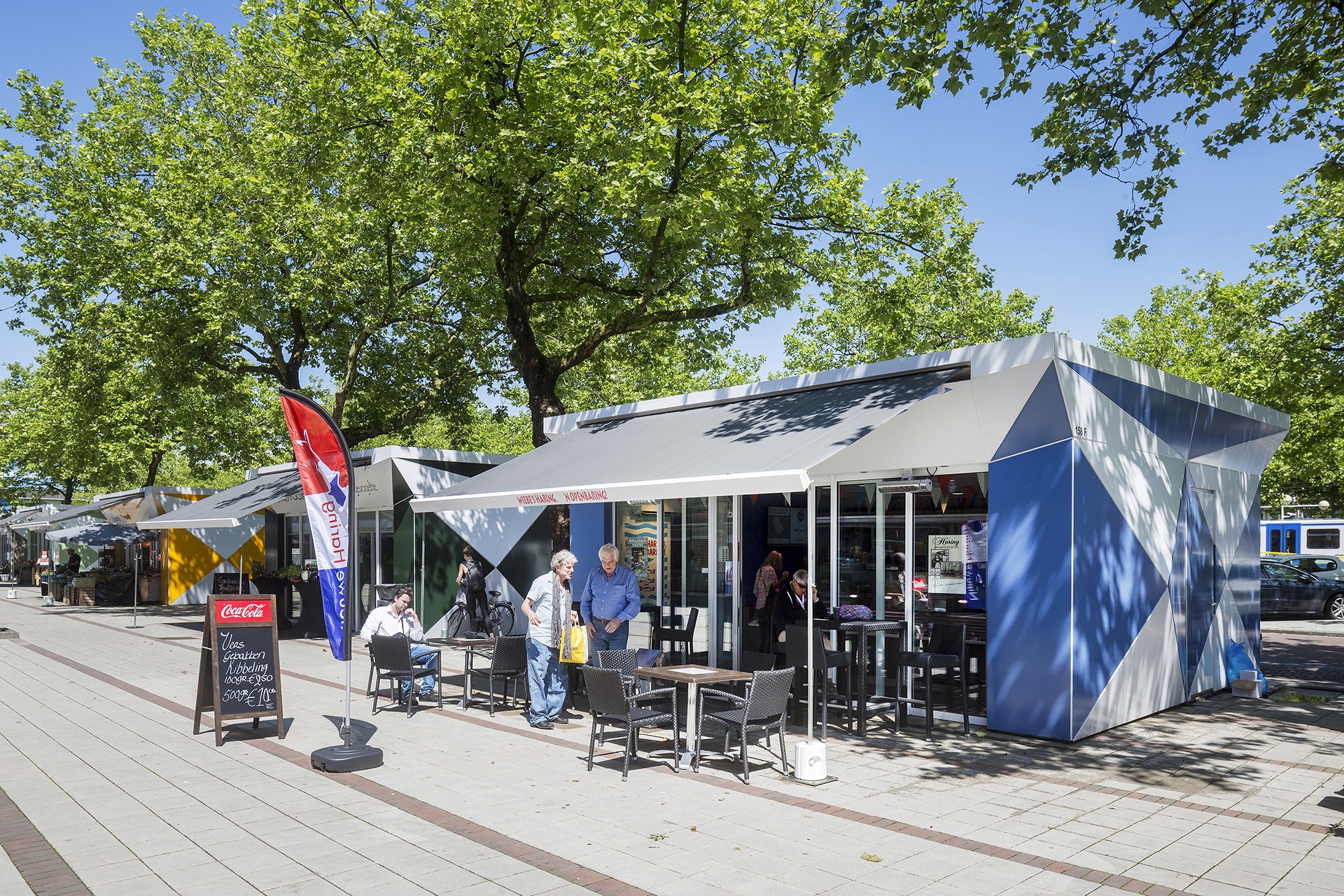
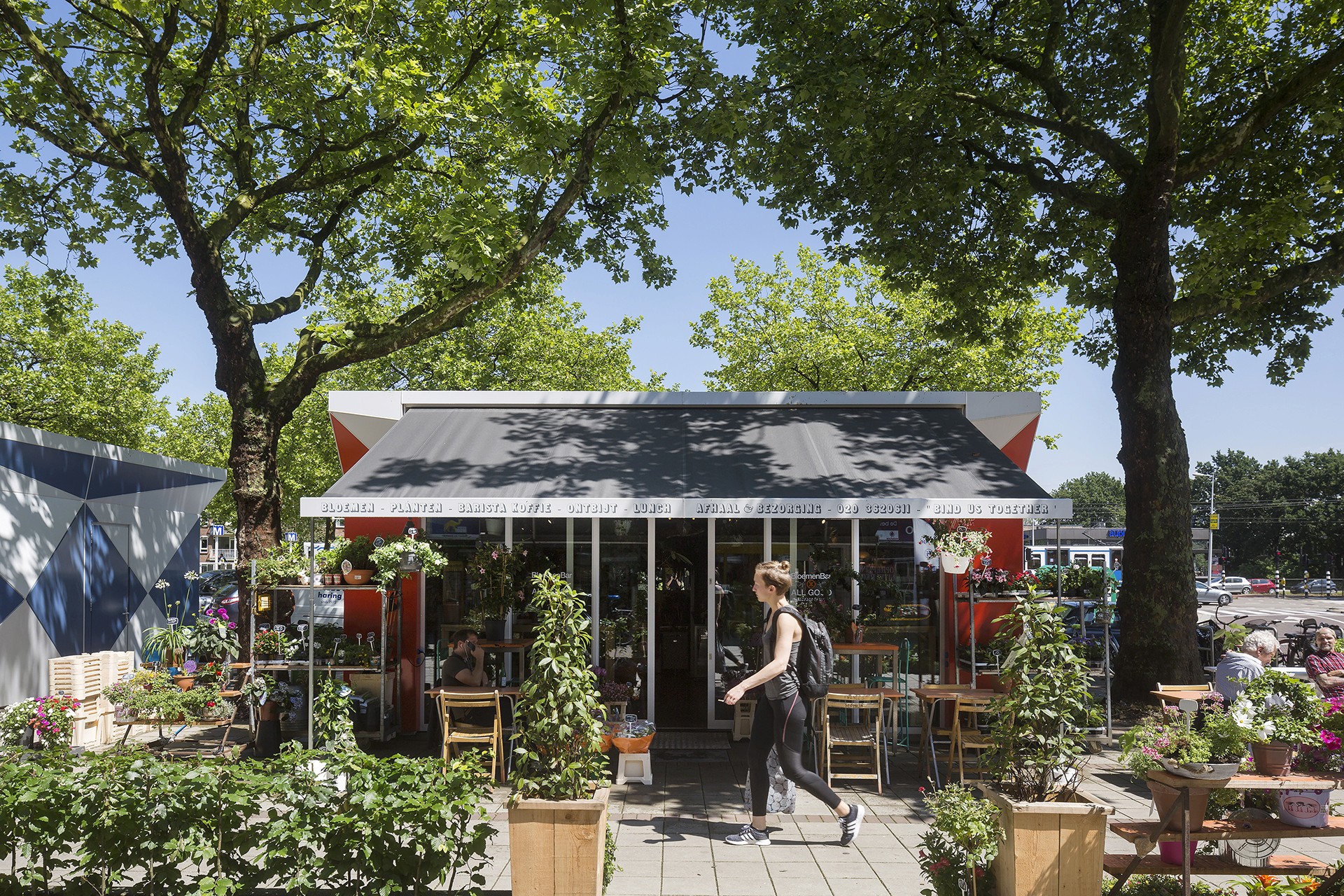
The renovated Rooswijck Shopping Square now has a clear layout with defined walking routes. By positioning the kiosks more strategically, the design creates a stronger sense of space, turning the plaza into a unified and cohesive shopping area.
Reclaiming Materials,
Reviving Identity
Attractive Facades Day and Night
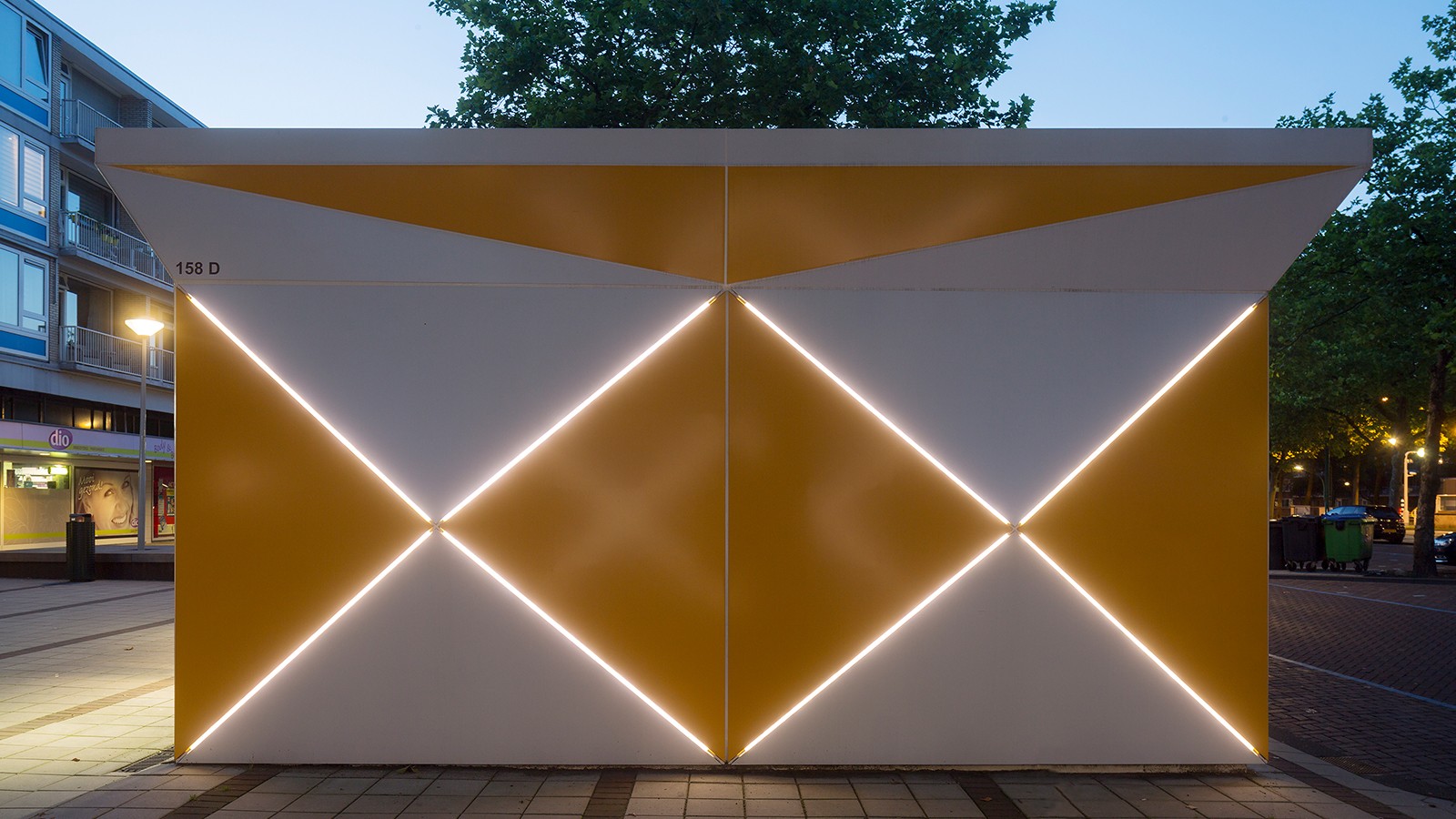
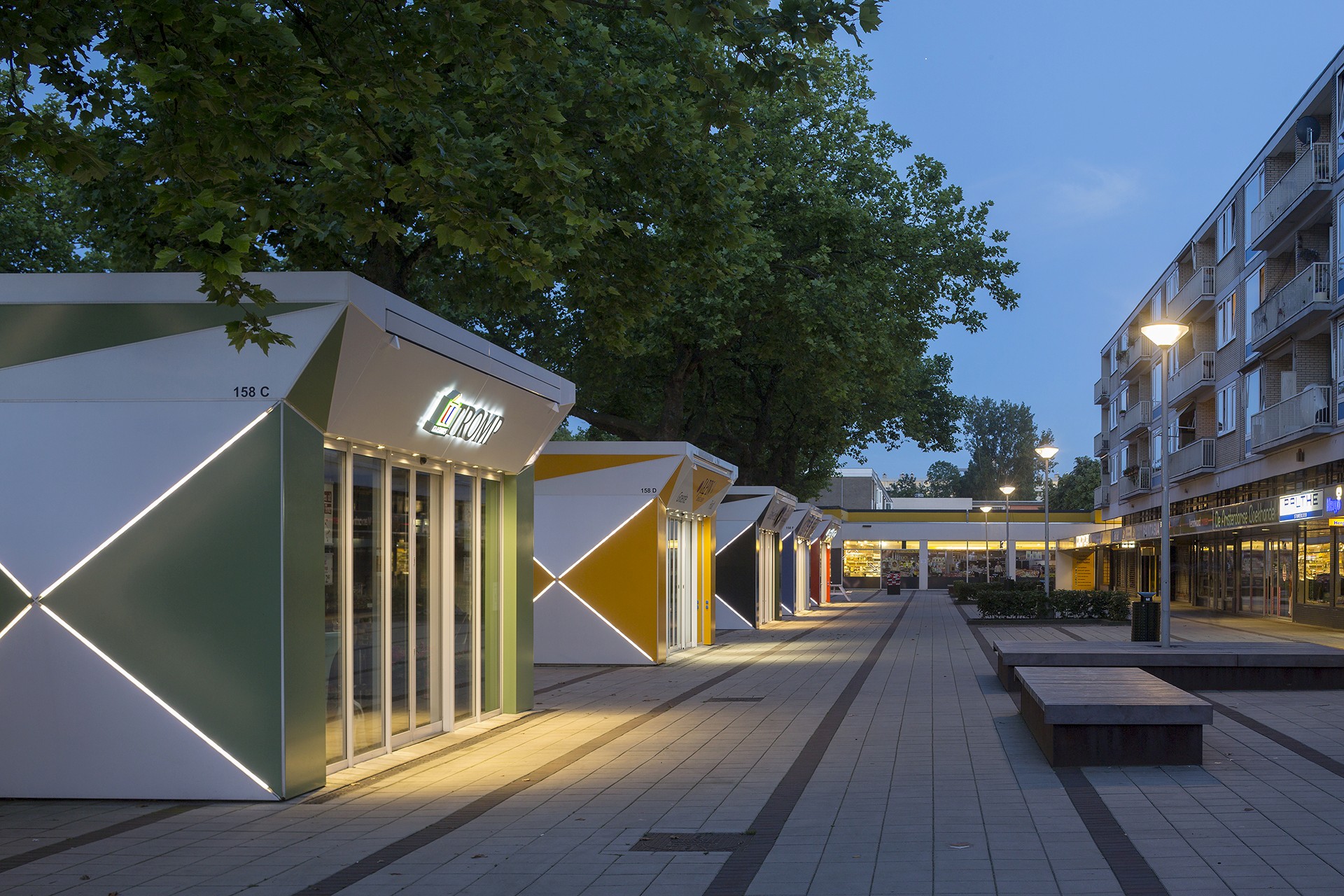
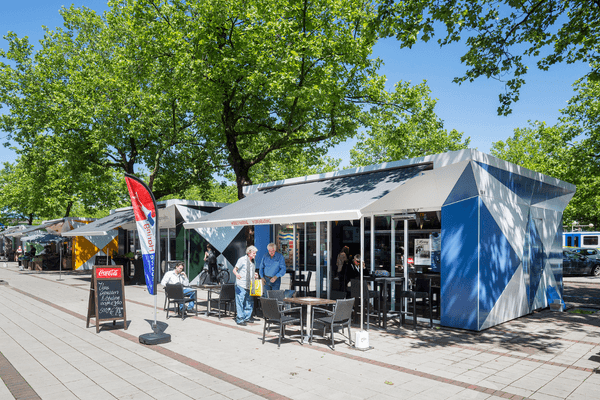
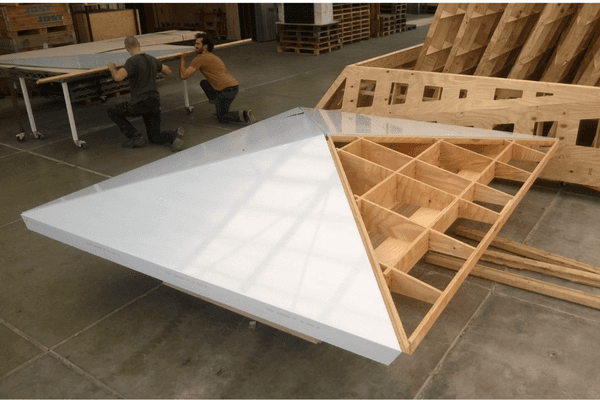
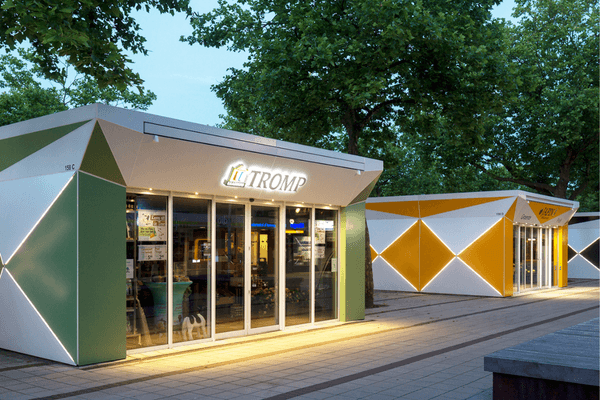
Each kiosk was designed with four equally appealing facades. Sunshades, relief patterns, and integrated lighting were incorporated so that every side of each kiosk presents an inviting face to the city.
Thanks to integrated lighting across all parts of the structures, the kiosks remain visible and vibrant after dark. They bring subtle liveliness to the square, ensuring it feels active and welcoming even in the evening hours.
Six Kiosks as a Family of Objects
Our assignment was to design six kiosks for different local entrepreneurs.
The goal was to create a design that would benefit both the city and the business owners. With six kiosks conceived as a family, we introduced a new architectural identity for the square. The entrepreneurs also received the right to operate their kiosks permanently (shops on leasehold land).