Step up

With the Step-Up residential building, we aim to show that there are opportunities to rethink typologies for affordable housing and create homes that are enjoyable, energy-efficient, and built according to circular principles. Step-Up focuses on two main aspects: community facilities and a prefabricated construction system.

With the Step-Up residential building, we aim to show that there are opportunities to rethink typologies for affordable housing and create homes that are enjoyable, energy-efficient, and built according to circular principles. Step-Up focuses on two main aspects: community facilities and a prefabricated construction system.

With the Step-Up residential building, we aim to show that there are opportunities to rethink typologies for affordable housing and create homes that are enjoyable, energy-efficient, and built according to circular principles. Step-Up focuses on two main aspects: community facilities and a prefabricated construction system.

Project type

Study

Study

Design team

Agnes Schneiders architect, AMS architectuur Yvonne Modderman, architect studio modderman, Annika Hermann, architect, IM. architecture studio

Agnes Schneiders architect, AMS architectuur Yvonne Modderman, architect studio modderman, Annika Hermann, architect, IM. architecture studio

Location

Nijmegen, The Netherlands

Nijmegen, The Netherlands

Community

We propose homes with shared outdoor spaces, organized in clusters instead of privatized balconies. This approach enables the delivery of highly cost-efficient homes with large, communal outdoor areas. The shared spaces are inspired by the traditional Dutch “hofjes” principle. Living in a hof (patio) provides residents with the opportunity to identify with a group and a shared environment, fostering healthier social and community life. Ultimately, this approach can also improve energy efficiency. Small-scale food production, waste management, and water purification can be easily integrated into the abundant greenery.


We propose homes with shared outdoor spaces, organized in clusters instead of privatized balconies. This approach enables the delivery of highly cost-efficient homes with large, communal outdoor areas. The shared spaces are inspired by the traditional Dutch “hofjes” principle. Living in a hof (patio) provides residents with the opportunity to identify with a group and a shared environment, fostering healthier social and community life. Ultimately, this approach can also improve energy efficiency. Small-scale food production, waste management, and water purification can be easily integrated into the abundant greenery.

Stepped Roofscape

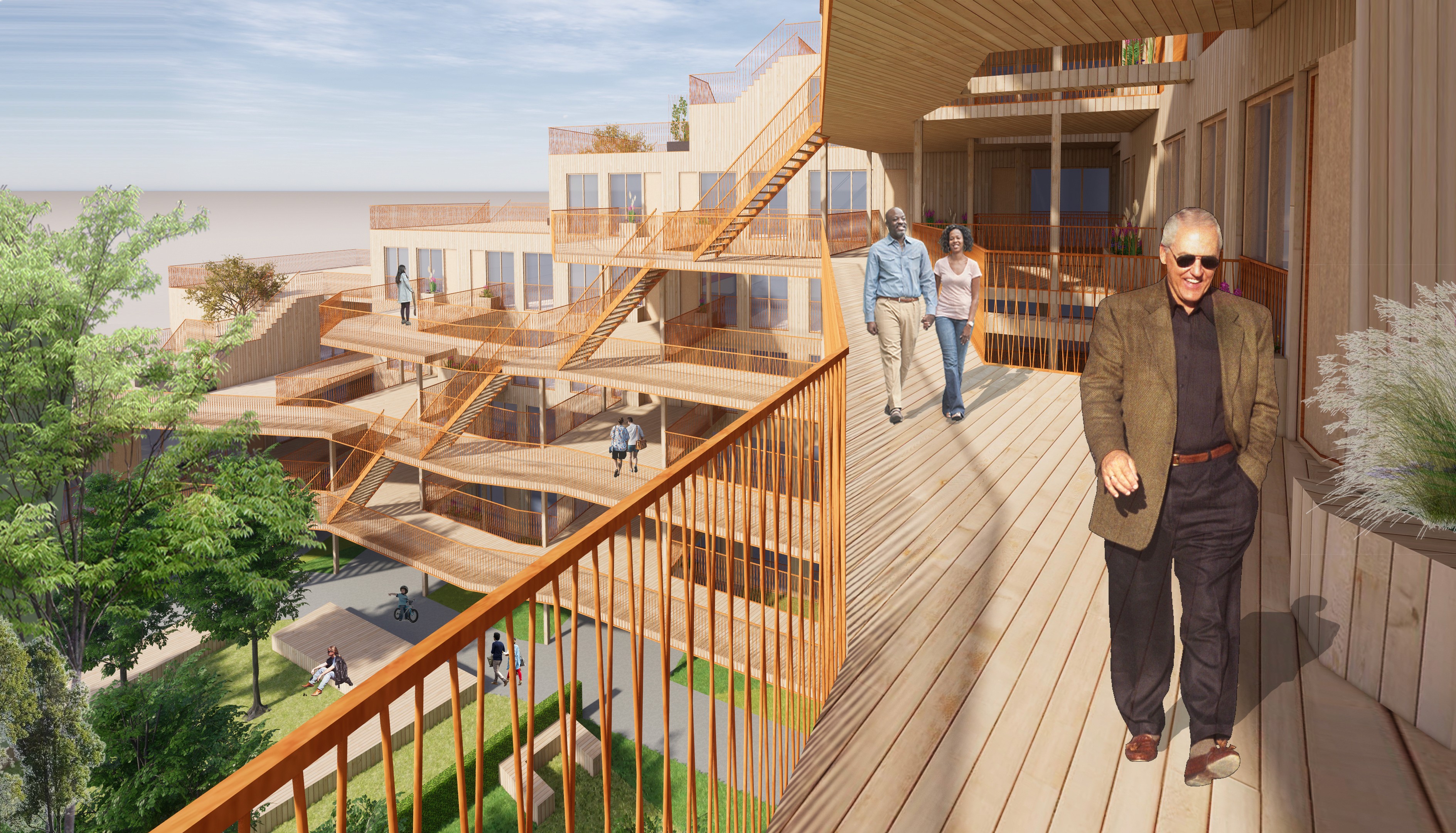
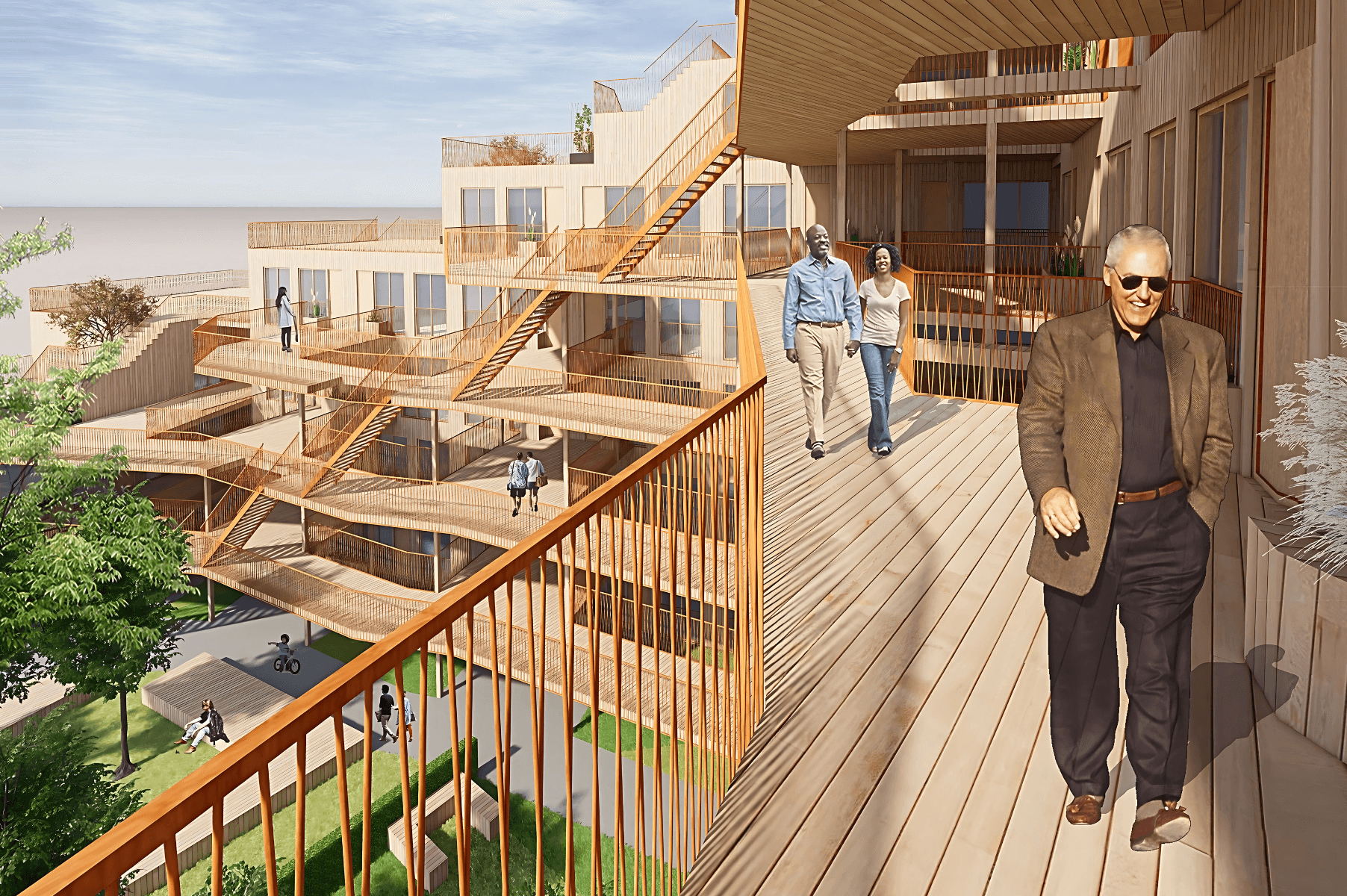
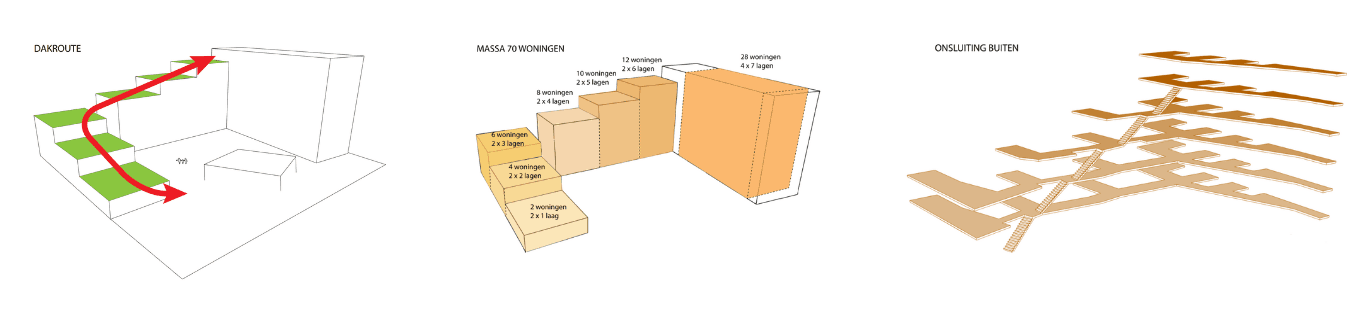
Step-Up is characterized by a stepped roofscape, culminating in a higher accent on the east side of the site. This iconic form will serve as a landmark in the future Hof van Holland neighborhood in Nijmegen. The shared rooftop gardens, connected by stairways, form a continuous route starting from the ground floor on the west side. The main entrance and lift are located on the northeast side of the building. The ground-floor garden fosters connections between residents while also linking the building to the surrounding neighborhood. Opportunities for communal vegetable gardens, seating areas, and a playground create a high-quality living environment.

Bridges

Collective spaces

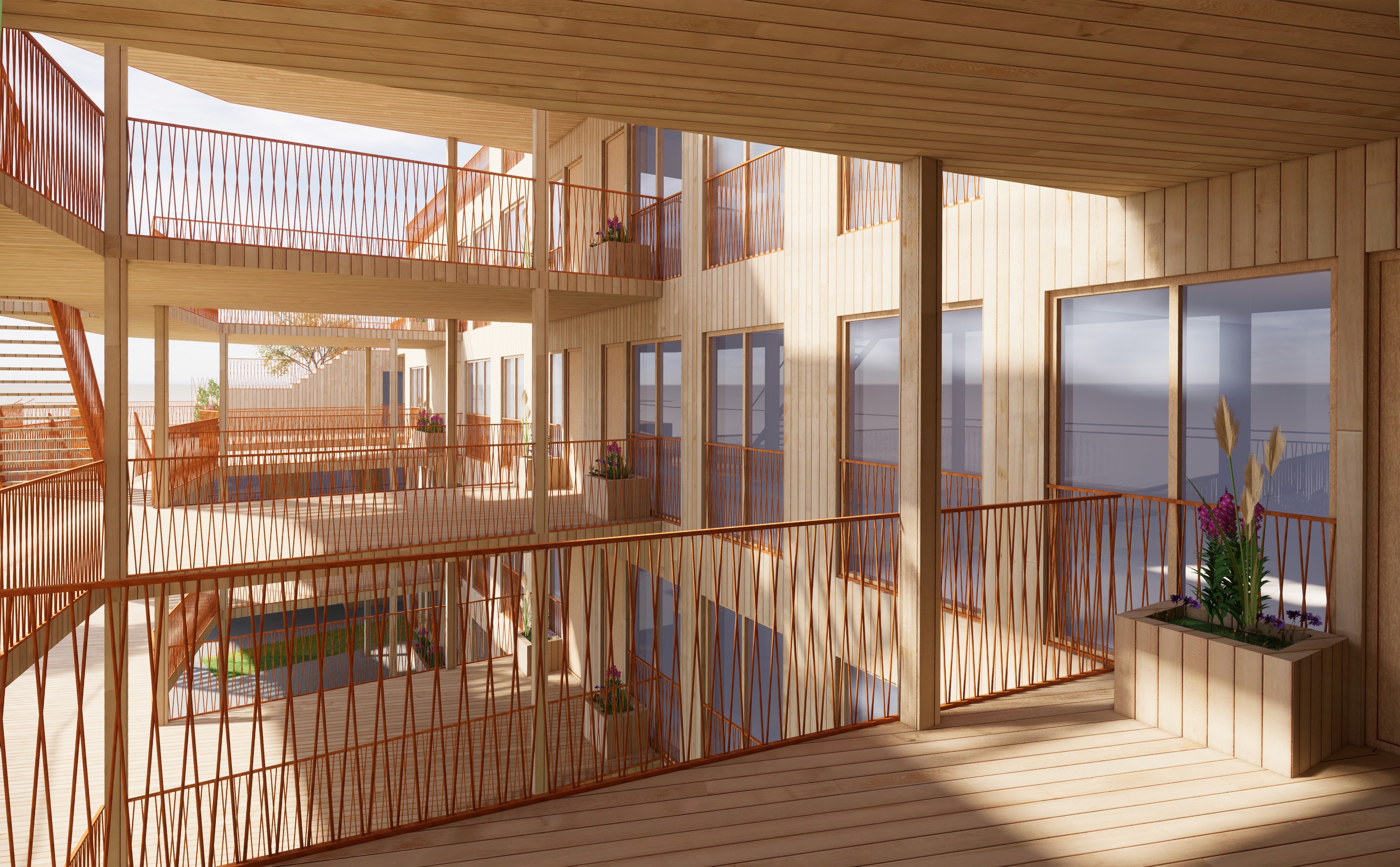
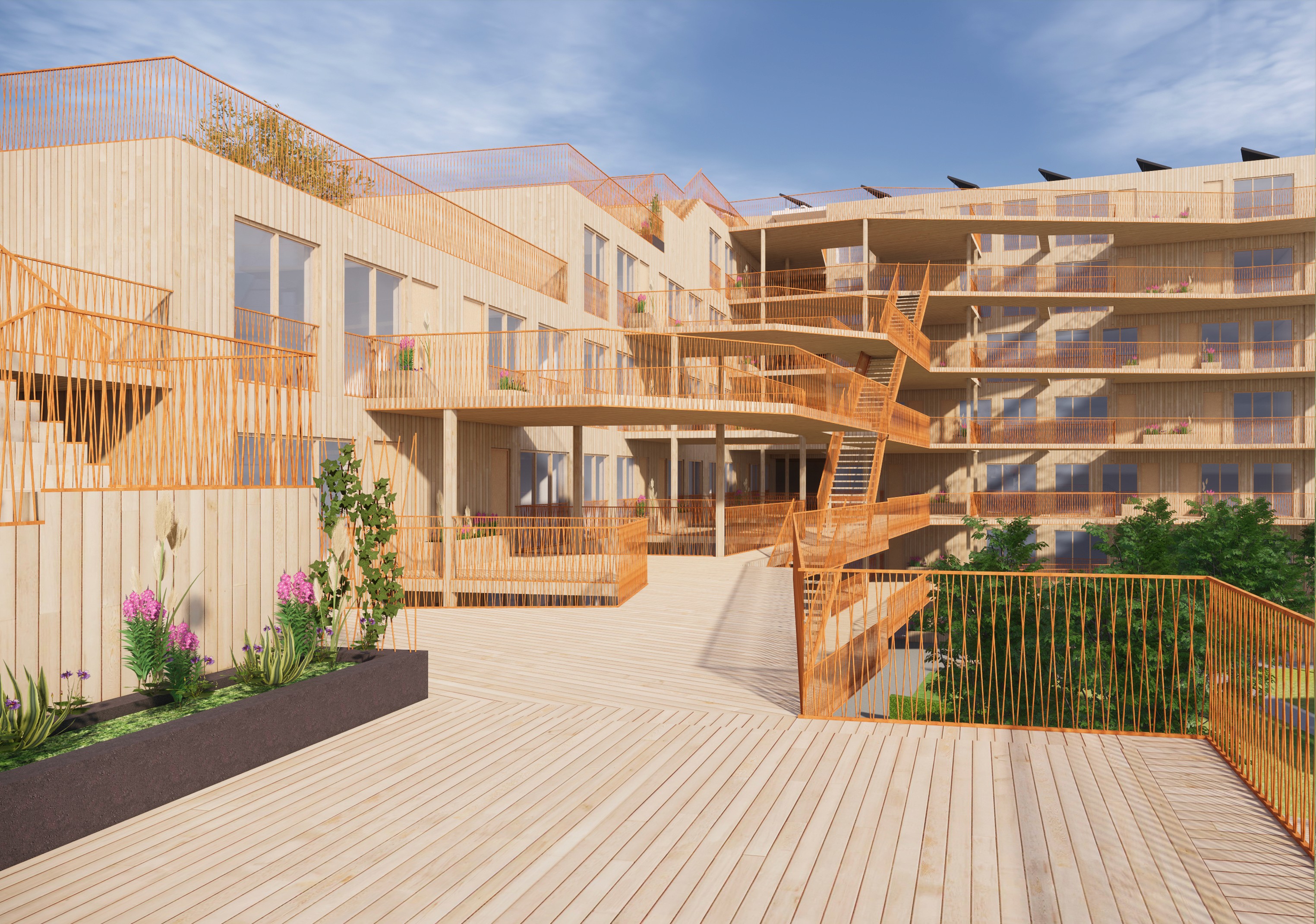
The building is accessed via three vertical cores combined with an open gallery structure. These galleries are wide, semi-public wooden streets, set apart from the façades. This arrangement creates space for bridges, making the environment light and airy. The favorable orientation and generous width of the galleries also allow them to function as an extension of the apartments themselves.

Prefabrication

Collective spaces

To build as efficiently and sustainably as possible, Step-Up uses a prefabricated Cross-Laminated Timber (CLT) system. Standardized modules are delivered on site and assembled with a crane. Each module measures 5.20 × 10.40 meters. This solution is cost-efficient, circular, and low in CO₂ emissions. Step-Up uses vertical recycled wooden slats for the façade, which are impregnated for durability and maintenance-free performance.
Gallery