Client
Design team
Sophie Valla, Marc Koelher, Ivo Jelinek
Luuk Kramer
Location
Leiden, Netherlands
Status
Delivered 2011
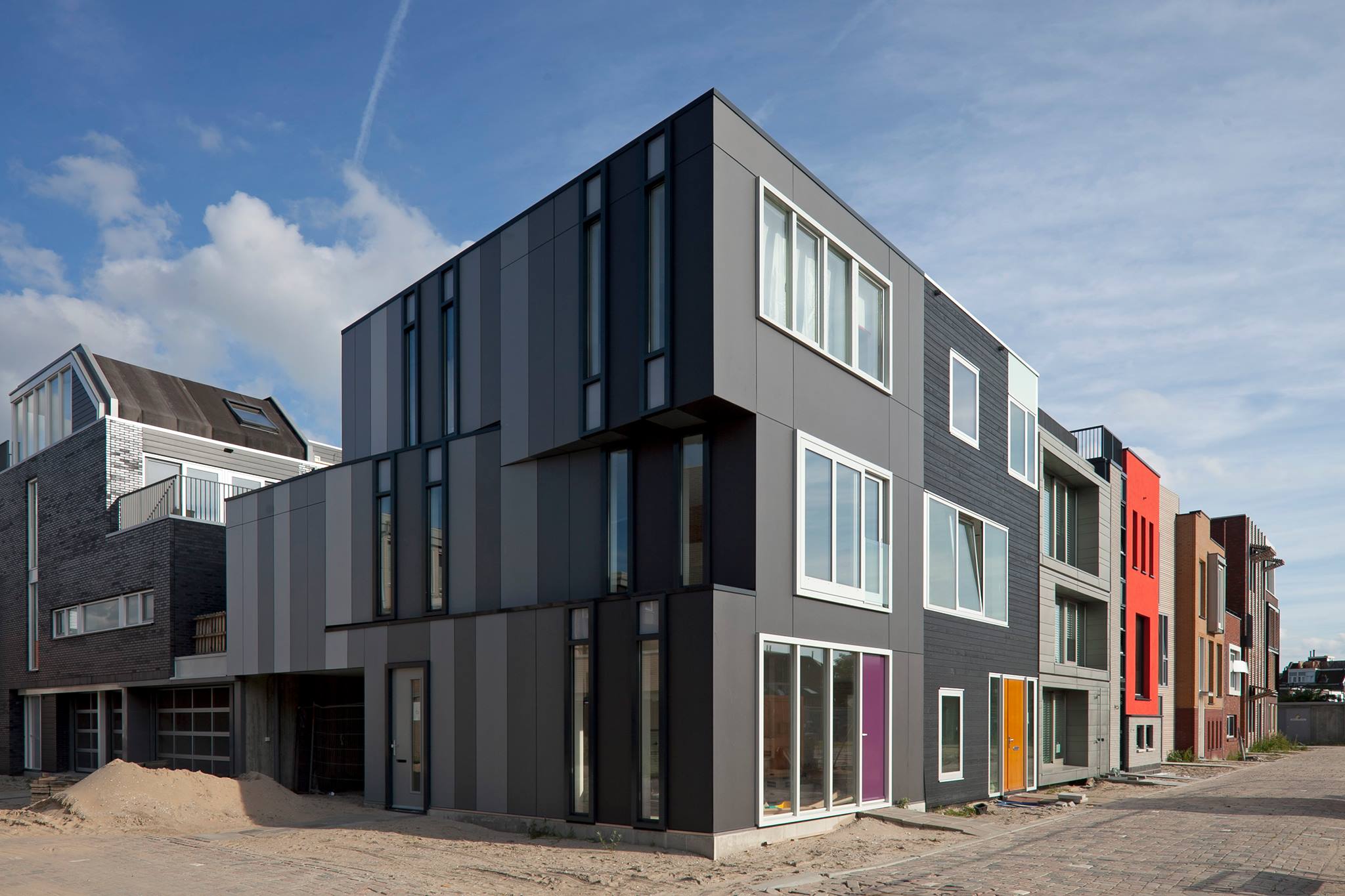
For this high-density area bordering the city centre, MVRDV conceived a master plan based on a double ground level: closed building blocks on half-sunken parking lots.
This approach allowed for a densely built yet green and low-traffic neighbourhood. A shared coordinator, contractor, and group of advisors worked on each building block, after which each plot owner was free to design their own house according to personal needs and wishes.
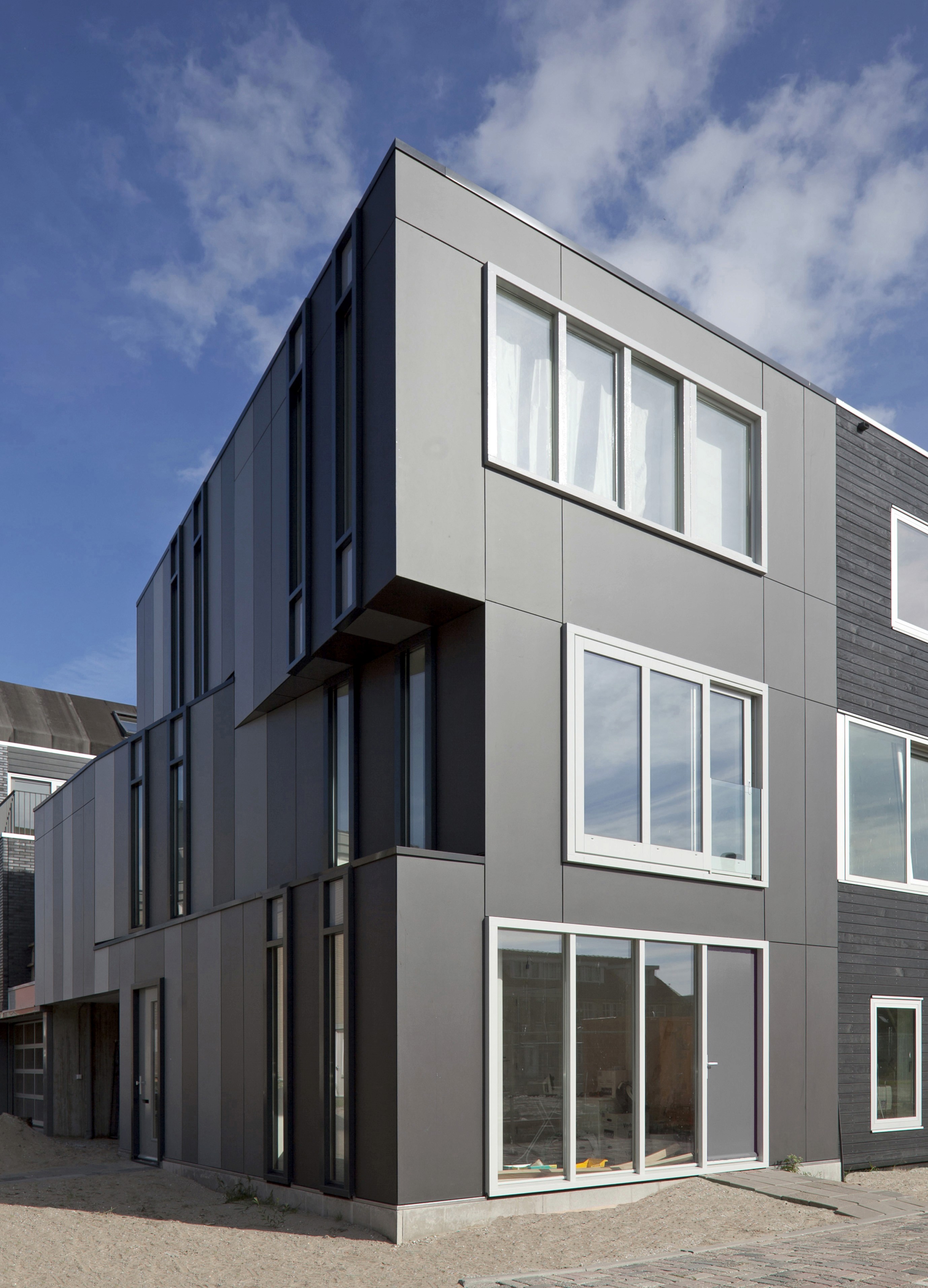
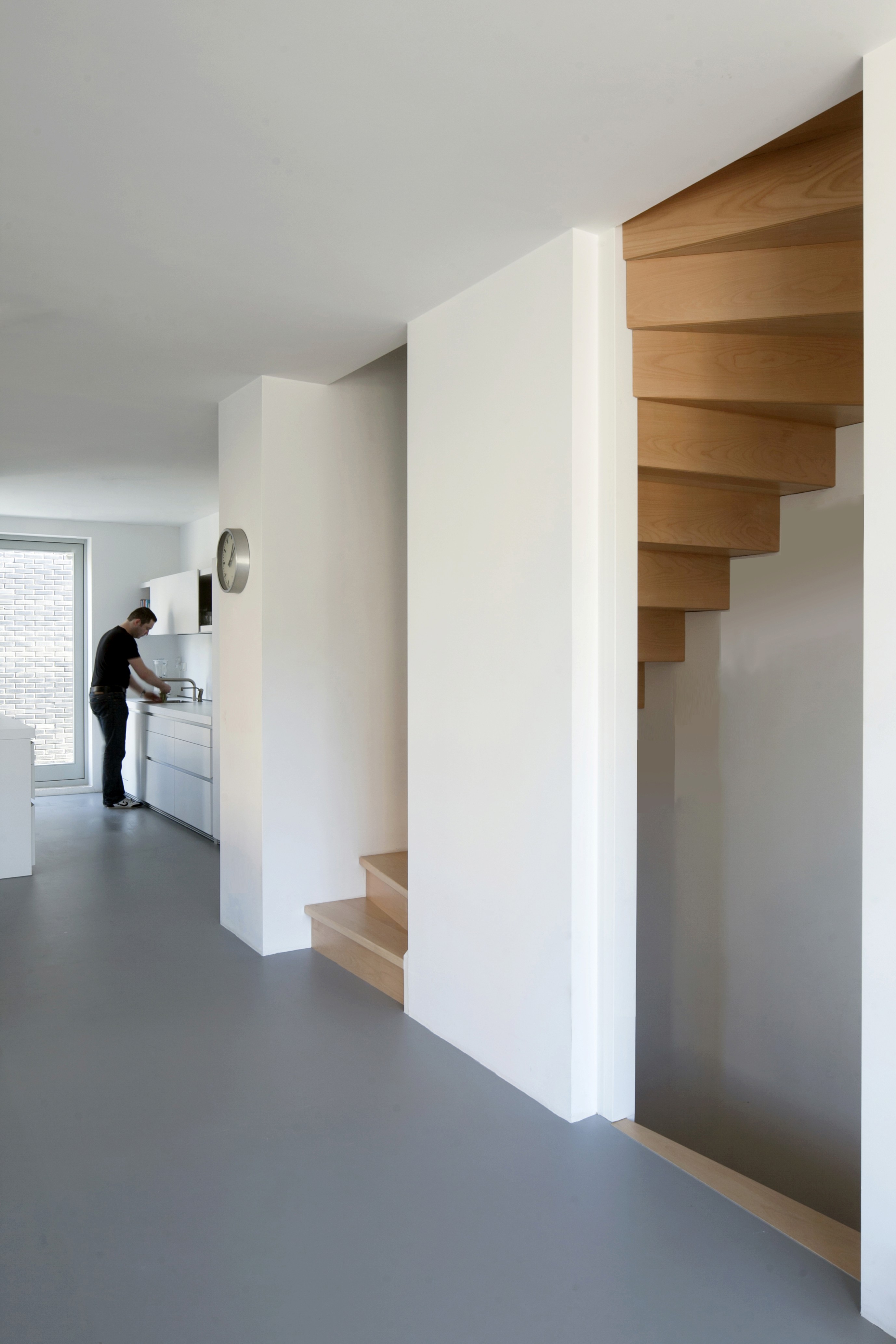
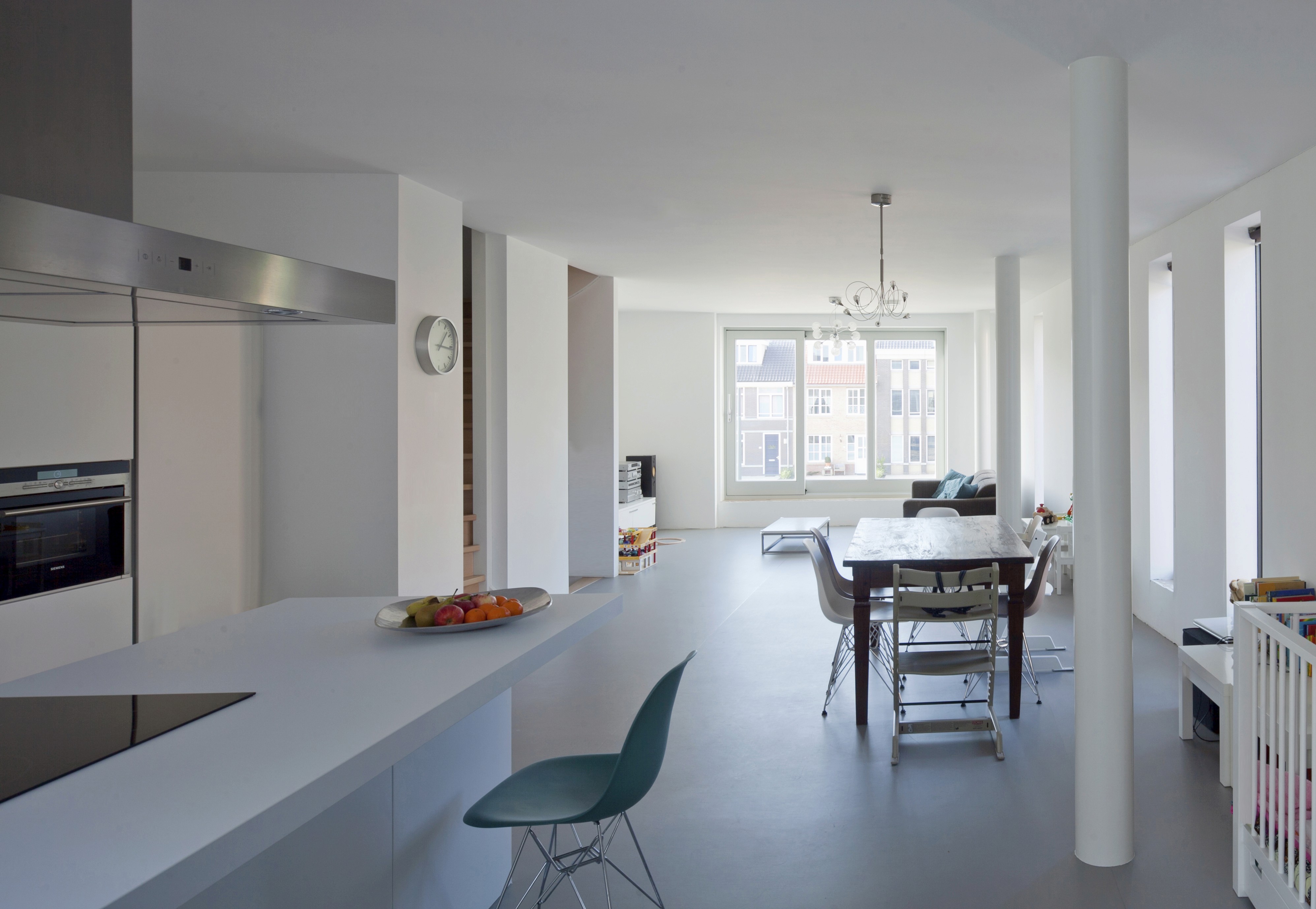
On the ground floor, bordered by a pedestrian street and a park, is a playroom for children. The living area occupies the first floor, where a large window opens towards the park, creating a spacious interior atmosphere and offering dynamic visual connections to the greenery outside.
Shifts
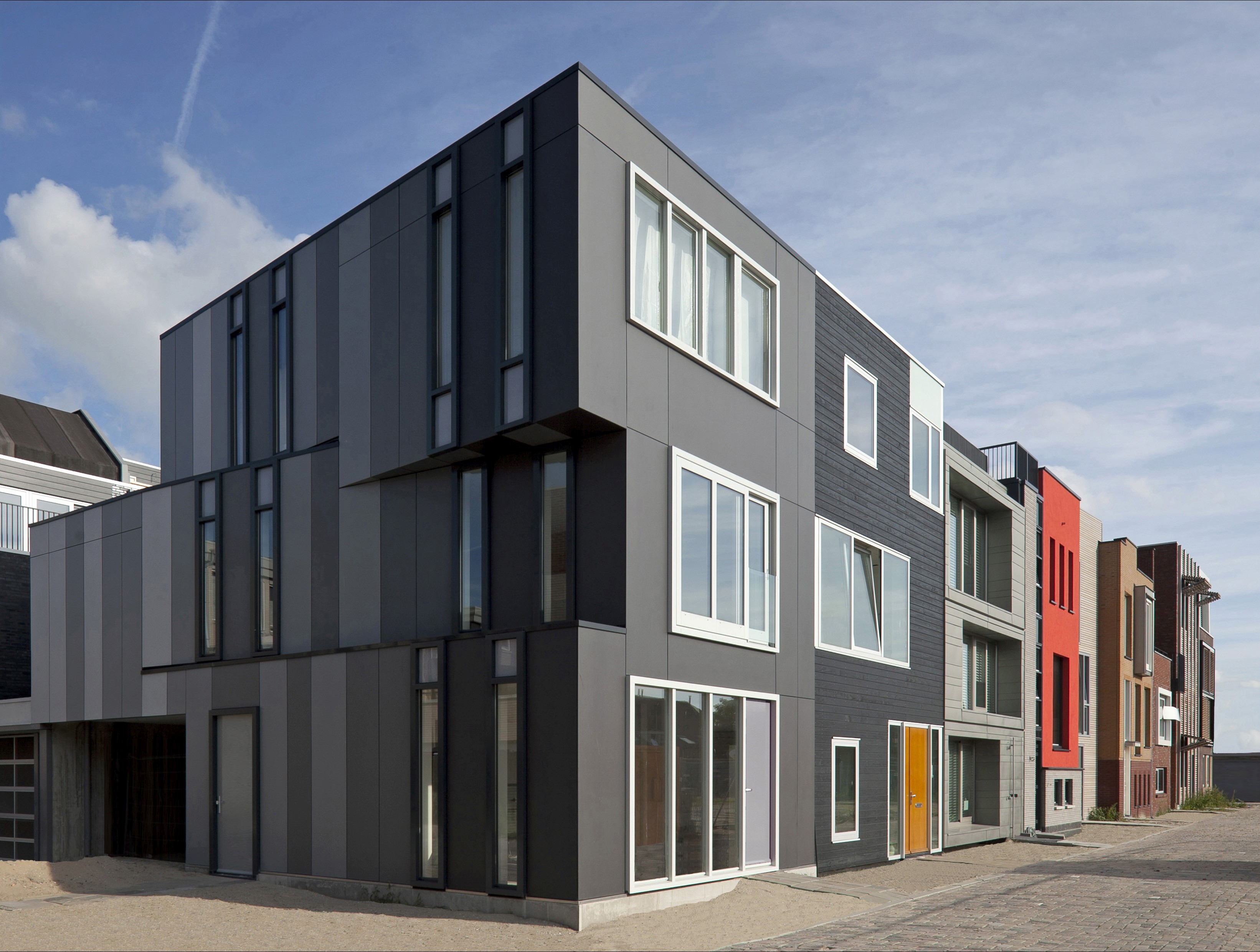
The house was built for a young family. From the start, the unique value of the corner position was fully embraced.
The clients were deeply involved in both the conception and construction processes, closely following and enriching the tectonic quality of the design.
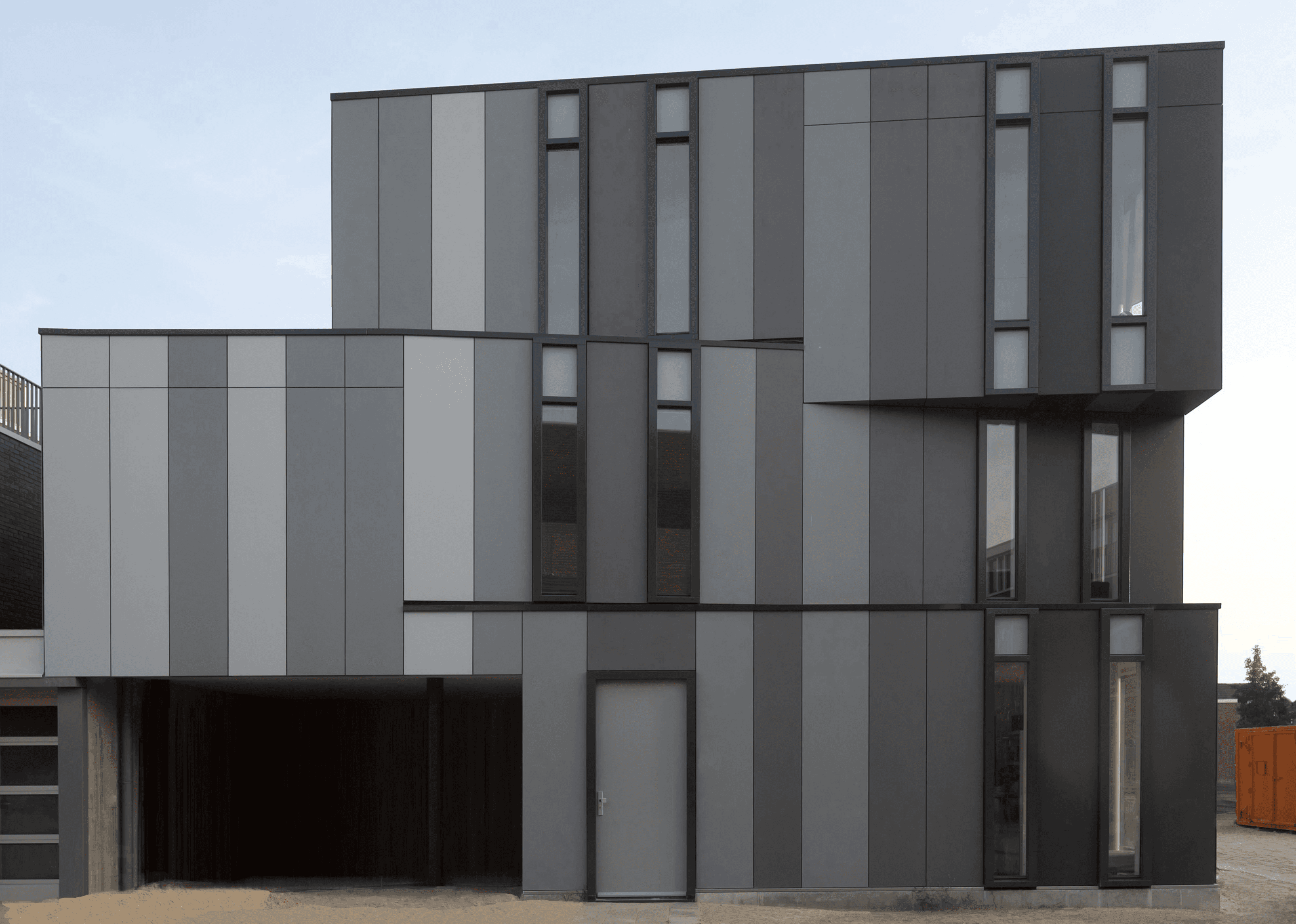
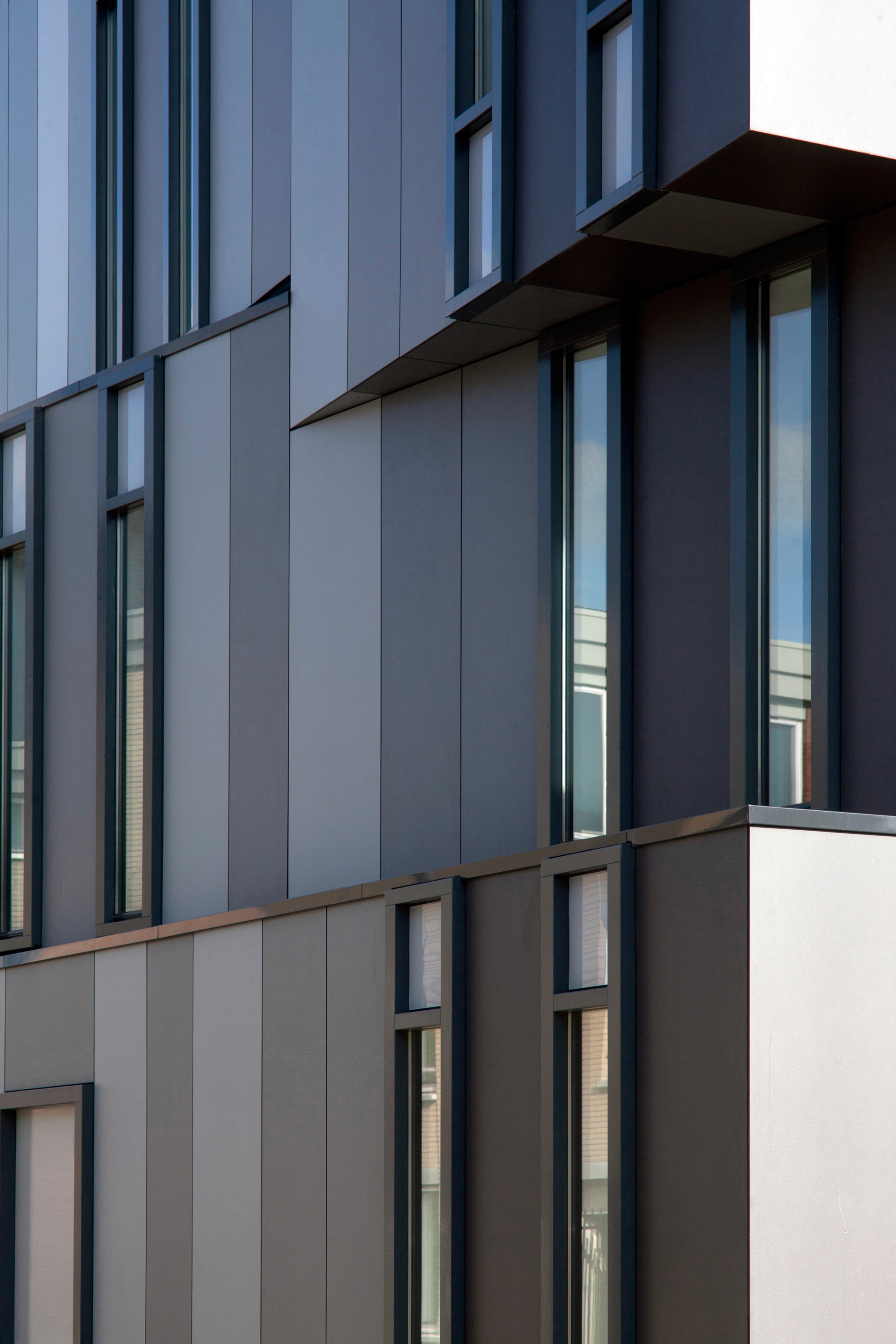
The lateral façade, which marks the end of the block, presents an intriguing and dynamic play of lines and volumes. This effect is achieved by shifts in the orientation of the façade on each of the three floors, creating a gradual ‘transformation’ of the geometry between the front and rear façades. Four internal supporting columns relieve the side façade of its load-bearing function, allowing this expressive freedom of form.
Façade Articulation
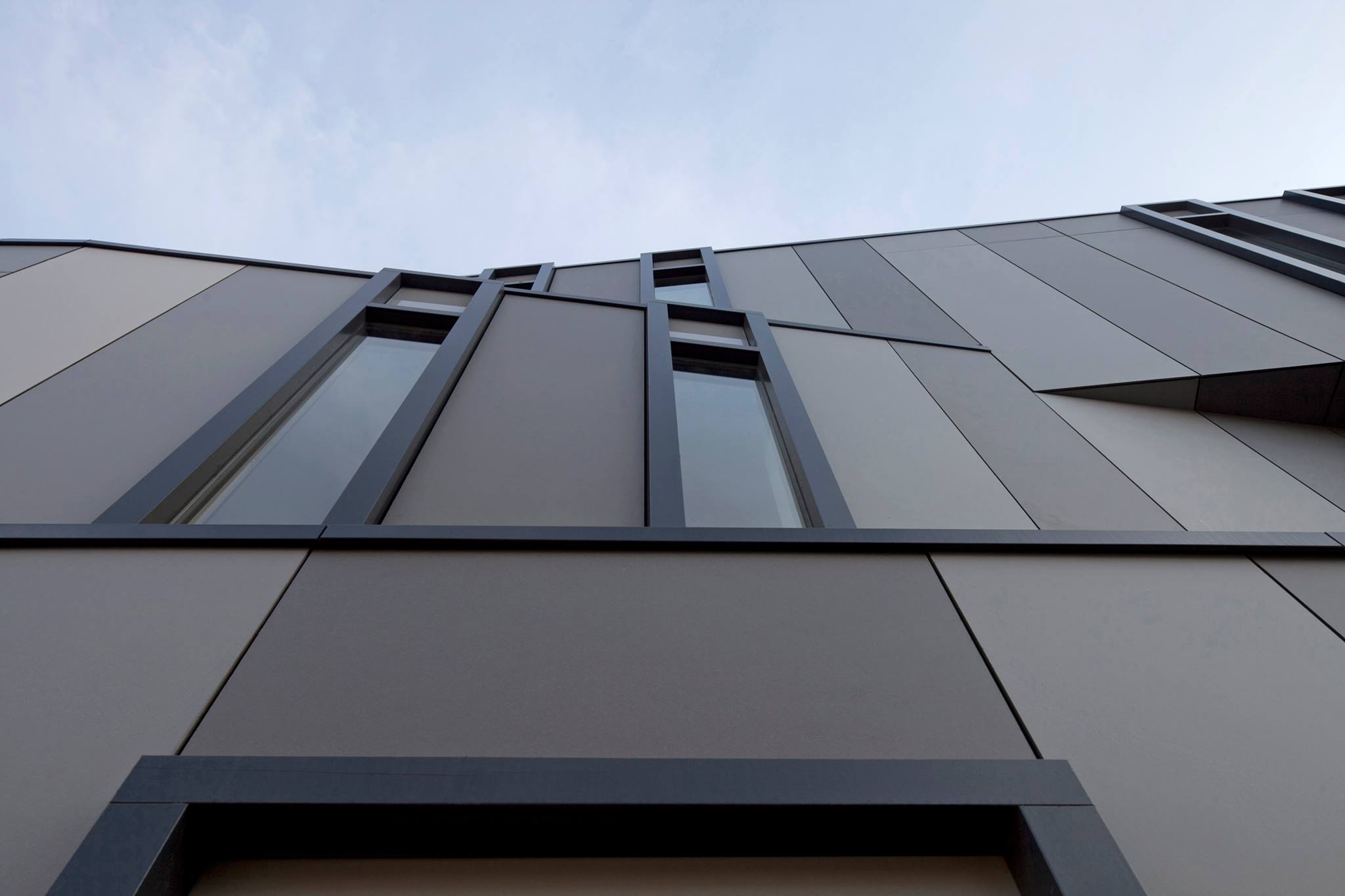
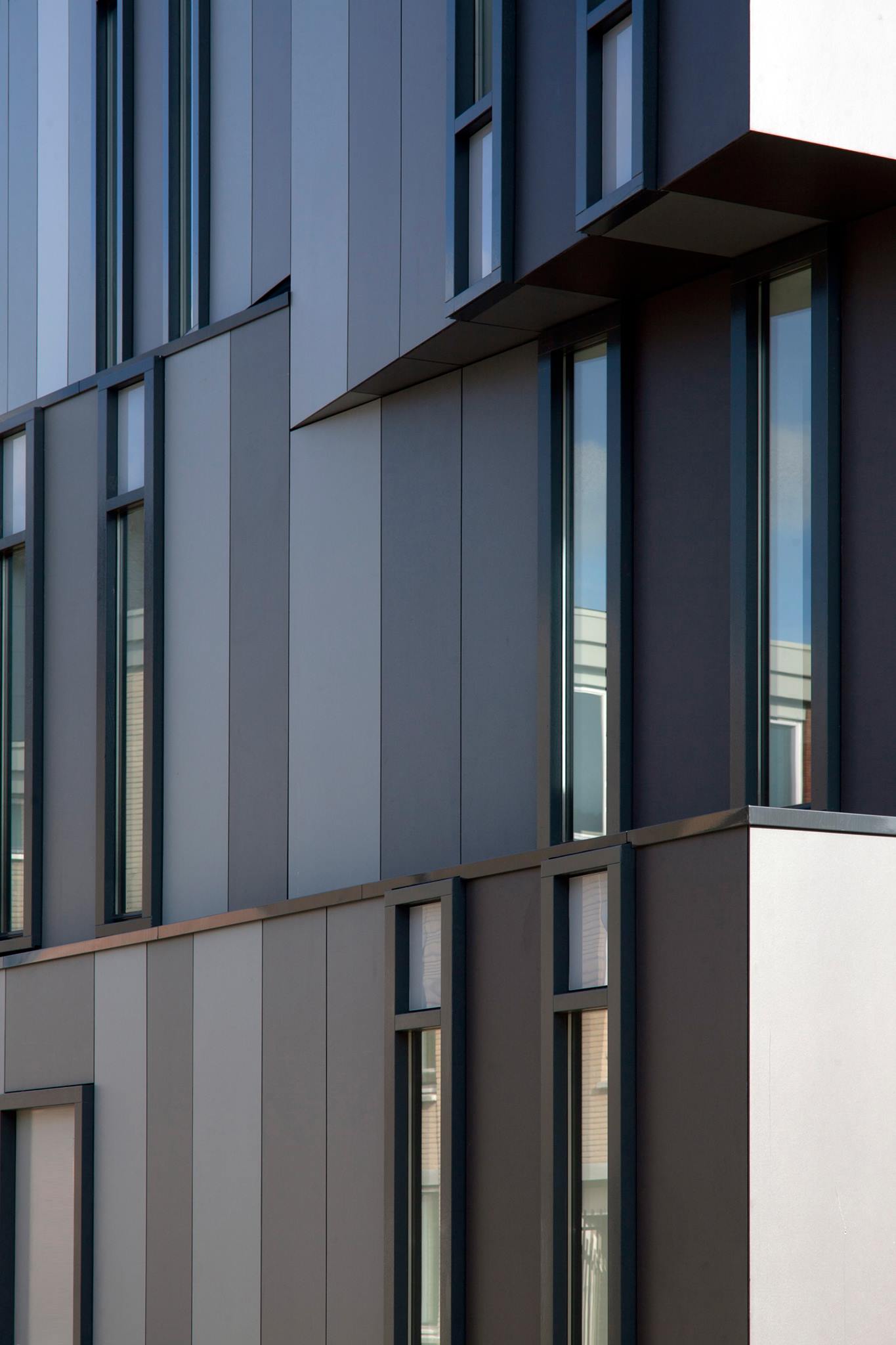
The horizontal transformation of the façade is accompanied by a vertical articulation expressed through the surface paneling and the window frames. The high, narrow windows emphasize the vertical rhythm while framing precise views from the interior and limiting direct visibility from outside.
Materials and Details
The façades were constructed using prefabricated wooden frame panels in varying shades of grey. The distribution of these tones accentuates the flowing transformation of the lateral façade. Extra-thick seams between the panels and the strongly profiled wooden window frames further enhance the vertical articulation of the exterior.